Ngoc Son Temple sits on Jade Islet in the middle of the lake, serving not only as a spiritual destination but also as a vibrant cultural symbol of Hanoi. Every altar and every statue inside the temple carries messages about the enduring values that the Vietnamese people have preserved through generations. Let’s explore this remarkable site together.
The Historical Journey of This Ancient Temple
Ngoc Son Temple originally began as a place of worship dedicated to Quan De, a deity believed to suppress evil and bring peace to the people. Over time, the temple changed names and functions several times, reflecting the historical shifts of Thang Long (old Hanoi).
During the Tran Dynasty, it was renamed Ngoc Son to commemorate soldiers who sacrificed their lives in the resistance against the Mongol invasions. By the 18th century, it became Khanh Thuy Palace under the Trinh Lords. After the palace was destroyed, a philanthropist built Ngoc Son Pagoda on the site to worship Buddha.
As time passed, the pagoda fell into disrepair. It was not until 1865 that scholar Nguyen Van Sieu initiated a major restoration, rebuilding Ngoc Son Temple into the form we recognize today. During this renovation, iconic structures such as Pen Tower (Thap But), Ink Slab (Dai Nghien), and The Huc Bridge were constructed, enhancing the sacred complex.
In 2013, Ngoc Son Temple was officially recognized as a National Special Relic Site. Beyond being a scenic attraction, it has long been a place where students pray before important exams, symbolizing Hanoi’s deep respect for education and moral values.
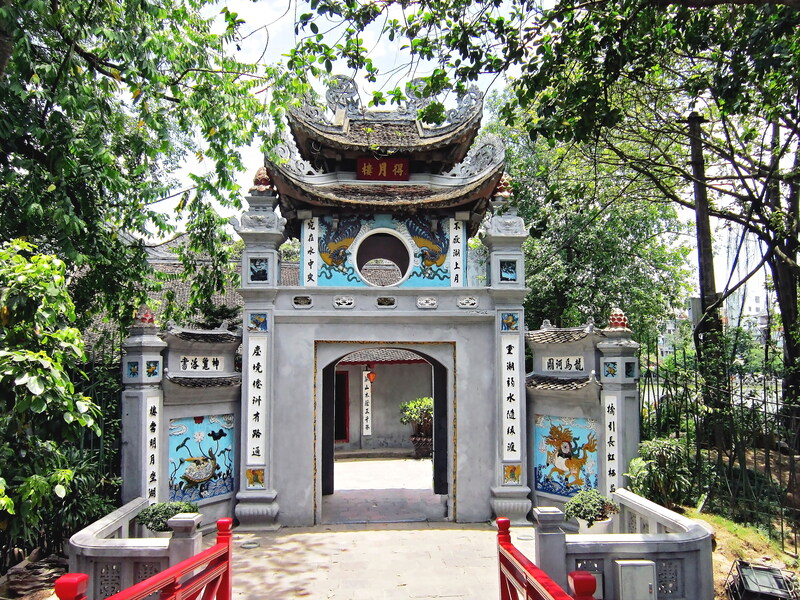
Ngoc Son Temple worships Van Xuong De Quan, the deity representing examinations, scholarship, and intellect. Photo: Bui Thuy Dao Nguyen
Helpful Tips for Your Visit
Best Time to Visit
Ngoc Son Temple is open year-round, but the early spring festival season is considered the most beautiful time to visit, pray for blessings, and immerse yourself in Hanoi’s traditional atmosphere. From Monday to Friday, the temple is open from 7:00 AM to 6:00 PM. On weekends, closing time is extended to 9:00 PM to accommodate more visitors.
Admission Fees: Children under 15 enter free of charge, students pay 15,000 VND, and adults pay 30,000 VND per visit. If you only cross The Huc Bridge without entering the temple grounds, you do not need to purchase a ticket.
Note: Ticket prices are for reference only and may change.
How to Get to Ngoc Son Temple
For travelers coming from afar, we recommend booking a flight to Hanoi and taking an airport transfer from Noi Bai International Airport. If traveling by bus, you can arrive at My Dinh or Gia Lam bus stations and continue to the city center. Ngoc Son Temple is located on Dinh Tien Hoang Street, along the shore of Hoan Kiem Lake, easily recognized by the bright red The Huc Bridge stretching gracefully over the water.
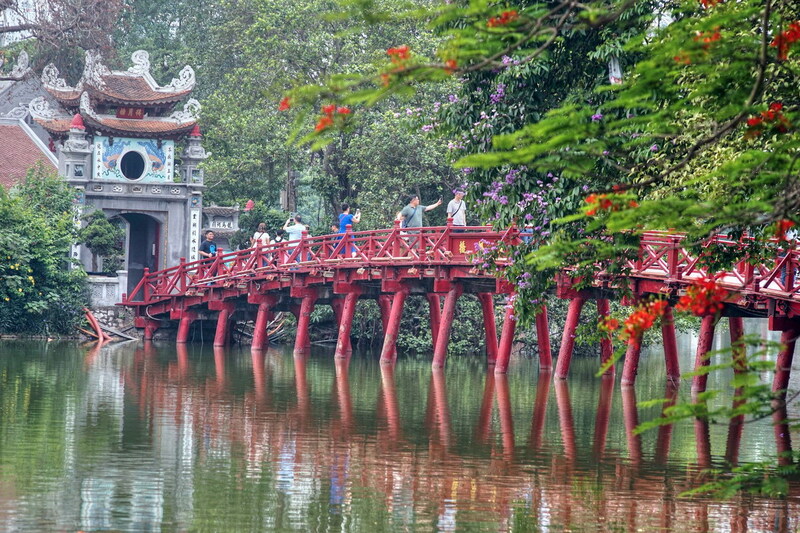
Cross The Huc Bridge to reach the temple. Photo: Redsvn.net
The Unique Charm of Ngoc Son Temple
A Harmonious and Serene Architectural Space
From Dinh Tien Hoang Street, visitors enter through the temple gate, where dragon and tiger motifs and parallel sentences about scholarship decorate the walls. After crossing the vermilion, gracefully curved The Huc Bridge, you arrive at Dac Nguyet Lau (Moon-Contemplation Pavilion), a structure designed to capture the moonlight over the lake.
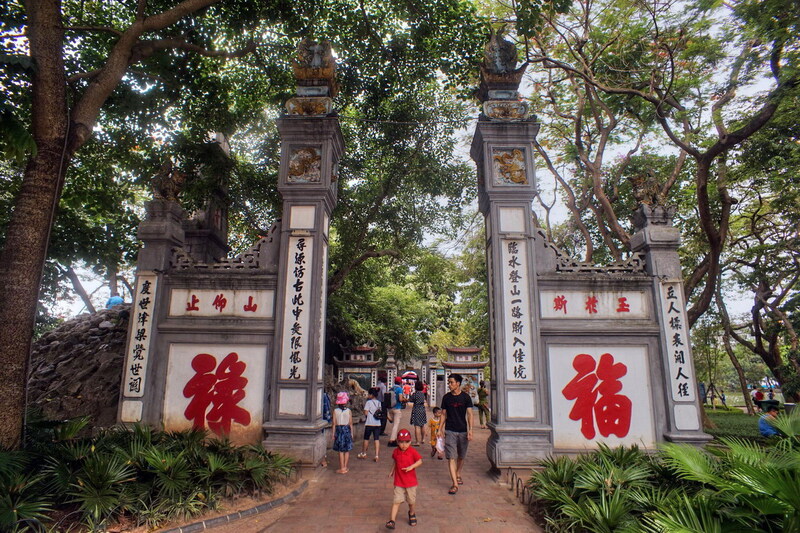
The Nghi Mon Gate features parallel sentences written in classical Chinese characters. Photo: Redsvn.net
Ngoc Son Temple is built in the “Tam” (three-part) architectural style, consisting of three main sections: the Front Hall, Middle Hall, and Rear Sanctuary.
- The Front Hall houses a large incense altar.
- The Middle Hall worships three prominent figures of Eastern culture: Van Xuong De Quan, patron of literature; Quan Vu, symbol of loyalty and righteousness; and Lu To, representing wisdom and enlightenment.
- The innermost Rear Sanctuary is dedicated to Tran Hung Dao, the national hero who defeated the Mongol invaders three times.
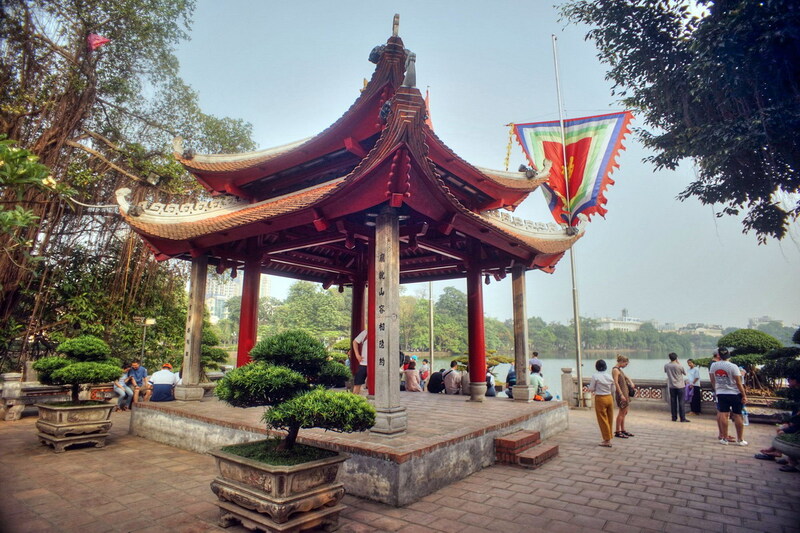
On the southern side stands Tran Ba Pavilion, an eight-roofed structure supported by stone pillars, reflecting traditional Vietnamese architectural aesthetics. Its design is modest yet refined, embodying Vietnamese spiritual and artistic philosophy.
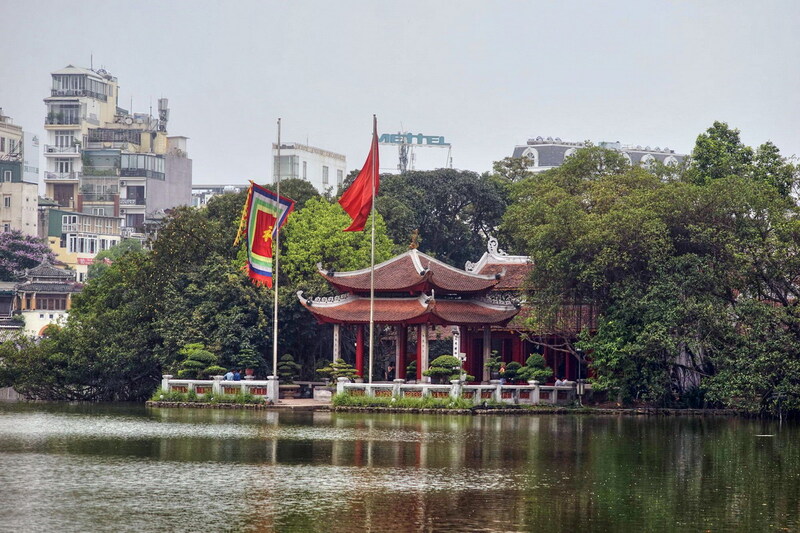
Ngoc Son Temple consists of two main worship areas: Van Xuong De Quan and Hung Dao Dai Vuong. Photo: Redsvn.net
Three Iconic Symbols Alongside the Temple
It is impossible to mention Ngoc Son Temple without referring to Pen Tower, Ink Slab, and The Huc Bridge — three enduring cultural symbols of Hoan Kiem Lake.
Pen Tower, approximately nine meters tall, was built by Nguyen Van Sieu in 1865. The three Chinese characters carved on it read “Ta Thanh Thien,” meaning “Write onto the Blue Sky.” At its base stands the Ink Slab, made of green stone and shaped like an inkstone resting on the backs of three frogs. Together, they honor knowledge and reflect Hanoi’s long-standing scholarly tradition.
Crossing The Huc Bridge, gently curved like a silk ribbon, visitors step into the tranquil temple grounds. The bridge’s name means “Place Where the Morning Sunlight Rests,” symbolizing a bright and auspicious beginning.
These three structures, together with the temple’s main sanctuary, create a harmonious landscape while expressing the Eastern philosophy of yin-yang balance and the five elements.
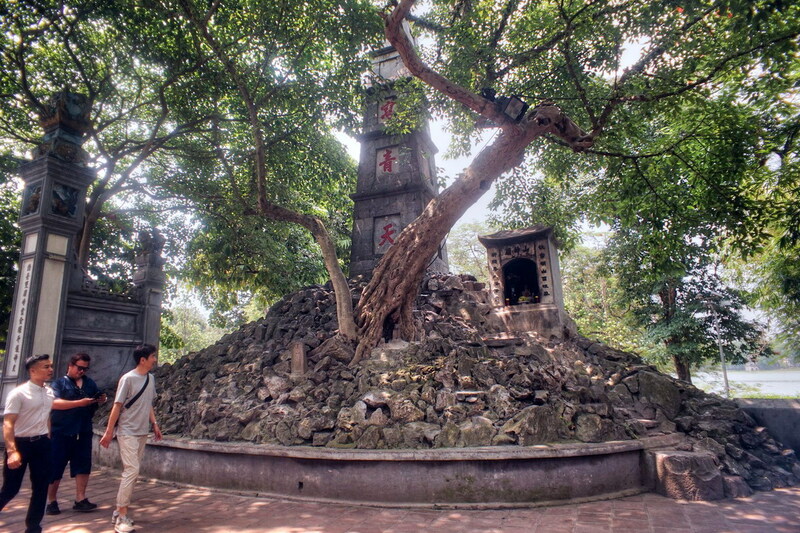
The nine-meter-tall Pen Tower is constructed of stone. Photo: Redsvn.net
A Convergence of Three Religions
One of the most distinctive features of Ngoc Son Temple is the philosophy of “Tam Giao Dong Nguyen,” meaning the harmonious coexistence of Confucianism, Taoism, and Buddhism. Inside the temple, you will find altars dedicated to Quan Van Truong, Van Xuong De Quan, Saint Tran Hung Dao, Buddha, and the Three Holy Mothers. All exist within the same sacred space, reflecting the openness, tolerance, and spiritual harmony characteristic of Vietnamese beliefs.
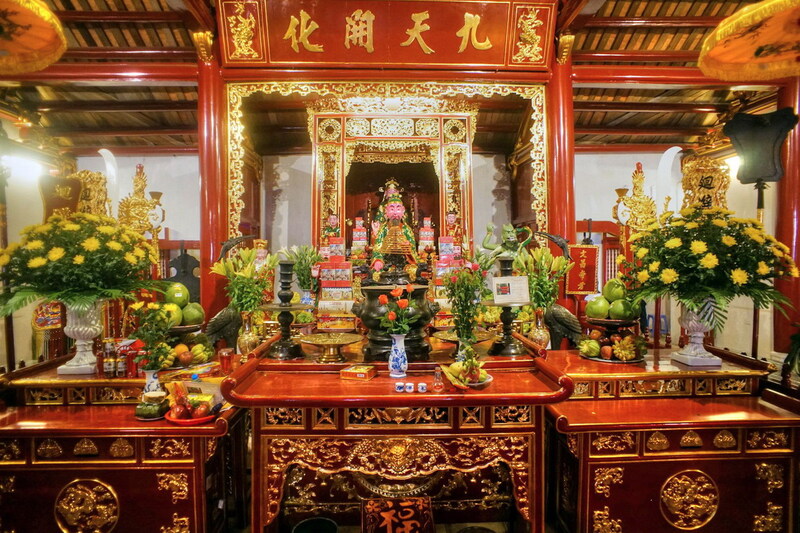
The Middle Hall worships Van Xuong, Quan Vu, and Lu To, revered in Confucian tradition. Photo: Redsvn.net
Hoan Kiem Turtle Specimens – Witnesses of Legend
Beyond its cultural and historical significance, Ngoc Son Temple also preserves two rare Hoan Kiem turtle specimens. One, preserved in 1967, weighed 250 kg and measured over two meters in length. The other turtle passed away in 2016 and weighed 169 kg. Both are displayed within the temple as powerful reminders of the lake’s legendary past and modern history.
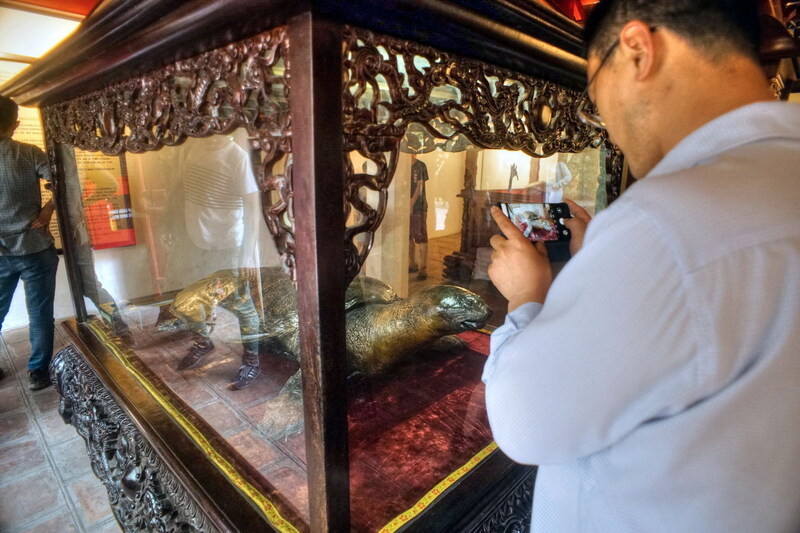
The preserved turtle specimen that passed away in 1967. Photo: Redsvn.net
A Cultural Exploration at Ngoc Son Temple
Offering Incense – Sightseeing – Preserving Tradition
As you cross The Huc Bridge, you step into the spiritual rhythm of Hanoi. In the serene space of Ngoc Son Temple, lighting incense is more than a ritual; it is a moment to connect with history, ancestors, and sacred values. From the Front Hall to Tran Ba Pavilion, from the Ink Slab to Pen Tower, each step brings you closer to the cultural depth of the ancient capital.
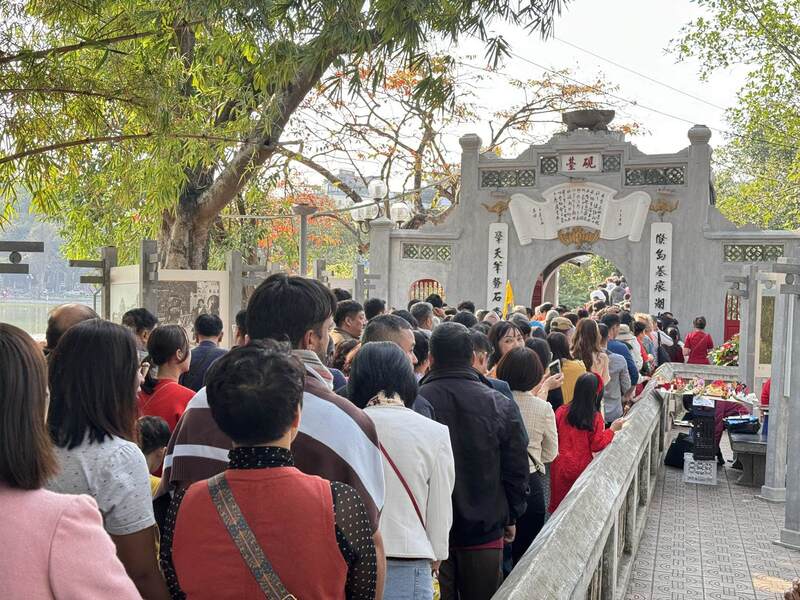
Visitors gather to offer incense on the second day of Lunar New Year. Photo: 24H
Photo Moments on The Huc Bridge
The bright red bridge set against the green waters of Hoan Kiem Lake creates a striking visual contrast. It is an ideal location for photos, whether capturing close-up details or wide-angle views. Stand in the middle of the bridge, lean against the railing, or photograph it from afar with its curved reflection shimmering on the lake’s surface — each angle delivers a quintessential “Hanoi” moment.
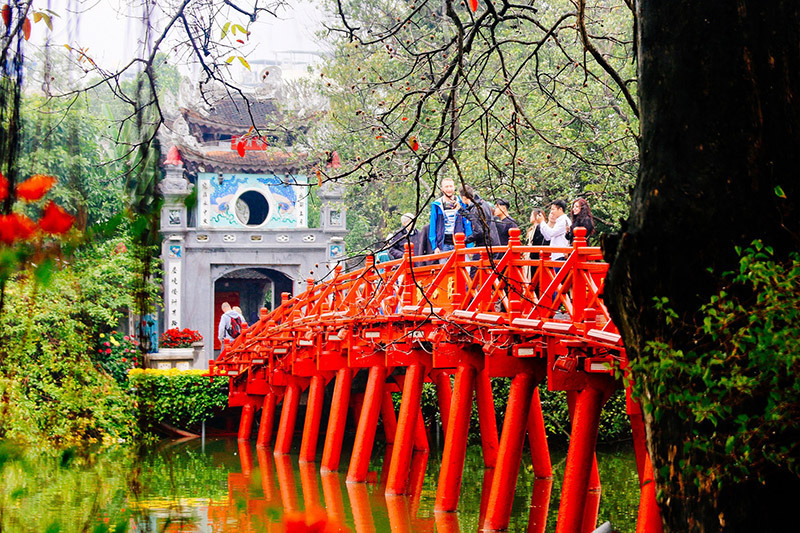
Many visitors check in beside the iconic deep-red The Huc Bridge. Photo: Tico Travel
Admire Hoan Kiem Lake and Turtle Tower
Walking around Ngoc Son Temple, you can admire the peaceful beauty of Hoan Kiem Lake, a site closely tied to the legend of the returned sword and national loyalty. In the middle of the lake stands Turtle Tower, quietly witnessing the passage of history. Whether at sunrise or sunset, the atmosphere here offers a rare sense of calm amid the urban bustle.
Weekend Walking Street and Trang Tien Ice Cream
On weekends and holidays, the area around the lake transforms into a pedestrian zone filled with music, folk games, and spontaneous gatherings. After visiting Ngoc Son Temple, you can stop by the nearby Hanoi Post Office and enjoy Trang Tien ice cream, a beloved childhood treat for generations of Hanoians.
A Few Tips for a More Enjoyable Visit
Choose the right time: Visiting early in the morning or late in the afternoon helps you avoid crowds and capture beautiful natural light for photos.
Best photo angles: Try wide shots capturing the entire The Huc Bridge, shots from the bridge toward Turtle Tower, or reflections shimmering on the lake.
Parking: Motorbike parking is available on Le Lai Street, Dinh Tien Hoang Street, or near Trang Tien Plaza. On weekends, arrive early as parking areas fill up quickly.
Keep your belongings safe: The lake and temple area can get crowded, especially during festivals and Lunar New Year. Carry light belongings, use a crossbody bag, and stay mindful of personal items.
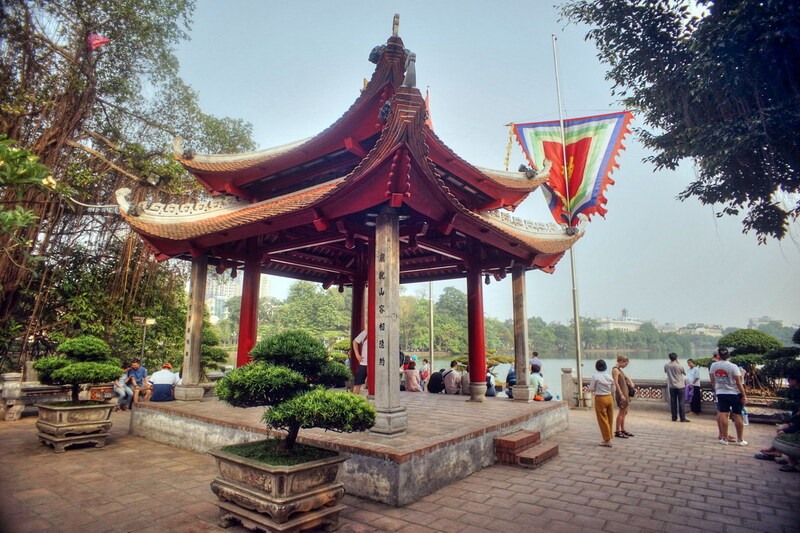
View from Tran Ba Pavilion. Photo: Redsvn.net
Ngoc Son Temple preserves cultural memory, tradition, and national pride. Amid the fast pace of modern life, it maintains a solemn and tranquil atmosphere, allowing every visitor to slow down and reflect. We hope this guide helps you enjoy a truly meaningful visit.